Short answer: A dead rat smells worst for the first week or two, and the smell lasts until the body has dried out, which can take two weeks or longer. If it is in the loft, the quickest fix is to find it, bag it and take out the insulation underneath, which soaks up the fluids. If it is inside a wall, the smell usually has to be waited out with plenty of ventilation.
Why the Smell Appears After Pest Control
Most rat poisons used in homes take a few days to work, so a rat that eats the bait doesn't die where it fed. It goes back to where it feels safe, often its nest in the loft, under the floor or inside a wall, and dies there. A smell a week or so after treatment starts is common, and it usually means the treatment is working, not that something has gone wrong.
How to Tell It Is a Dead Rat
- The smell itself: sweet, rotten and sickly, quite different from the sharp ammonia smell of rodent urine.
- It is strongest in one place, such as one bedroom, the landing under the hatch or one wall, and it builds over a few days.
- Flies: bluebottles turning up indoors, often gathering at one window or around the hatch, a week or two after the rat died.
- Staining: occasionally, a mark on the ceiling below where a carcass is lying.
How Long Does the Smell Last?
The smell is at its worst for the first week or two and lasts until the body has dried out, which can take two weeks or longer. It lasts longer in cool, damp weather, with a bigger rat, or with several of them. Air fresheners only mask it for a few minutes. If the carcass is in the loft, removing it is far quicker than waiting.
Finding a Dead Rat in the Loft
- Follow your nose: the smell is strongest close to it.
- Look for where flies are collecting.
- Check along the eaves, near any bait points, and along the runs and tunnels in the insulation.
- Look under the insulation near the nest, and in and around stored boxes.
Wear gloves and a mask while you look, and lift the insulation gently rather than pulling it out.
Removing a Dead Rat Safely
- Put on disposable gloves and a mask.
- Spray the carcass and the area around it with disinfectant.
- Pick it up with a bag turned inside out over your gloved hand, then pull the bag back over it, or use a dustpan you can disinfect afterwards.
- Double-bag it and put it in your general waste bin.
- Disinfect the spot where it was lying.
- Cut out and bag the insulation underneath: it will have soaked up fluids and won't stop smelling.
- Wash your hands thoroughly.
Our guide on how to clean up rat and mouse droppings covers the kit and the disinfectant in more detail.
If It Is Inside a Wall or Under the Floor
A rat that has died inside a cavity wall can't usually be reached without opening up the wall, which isn't practical in masonry. Under a suspended timber floor, lifting a board near the smell is sometimes worth it. Otherwise the answer is to wait it out with good ventilation: keep the windows open in the affected rooms and their doors closed to the rest of the house. Odour neutralisers can help a little; air fresheners just cover it up.
The Insulation Under a Dead Rat
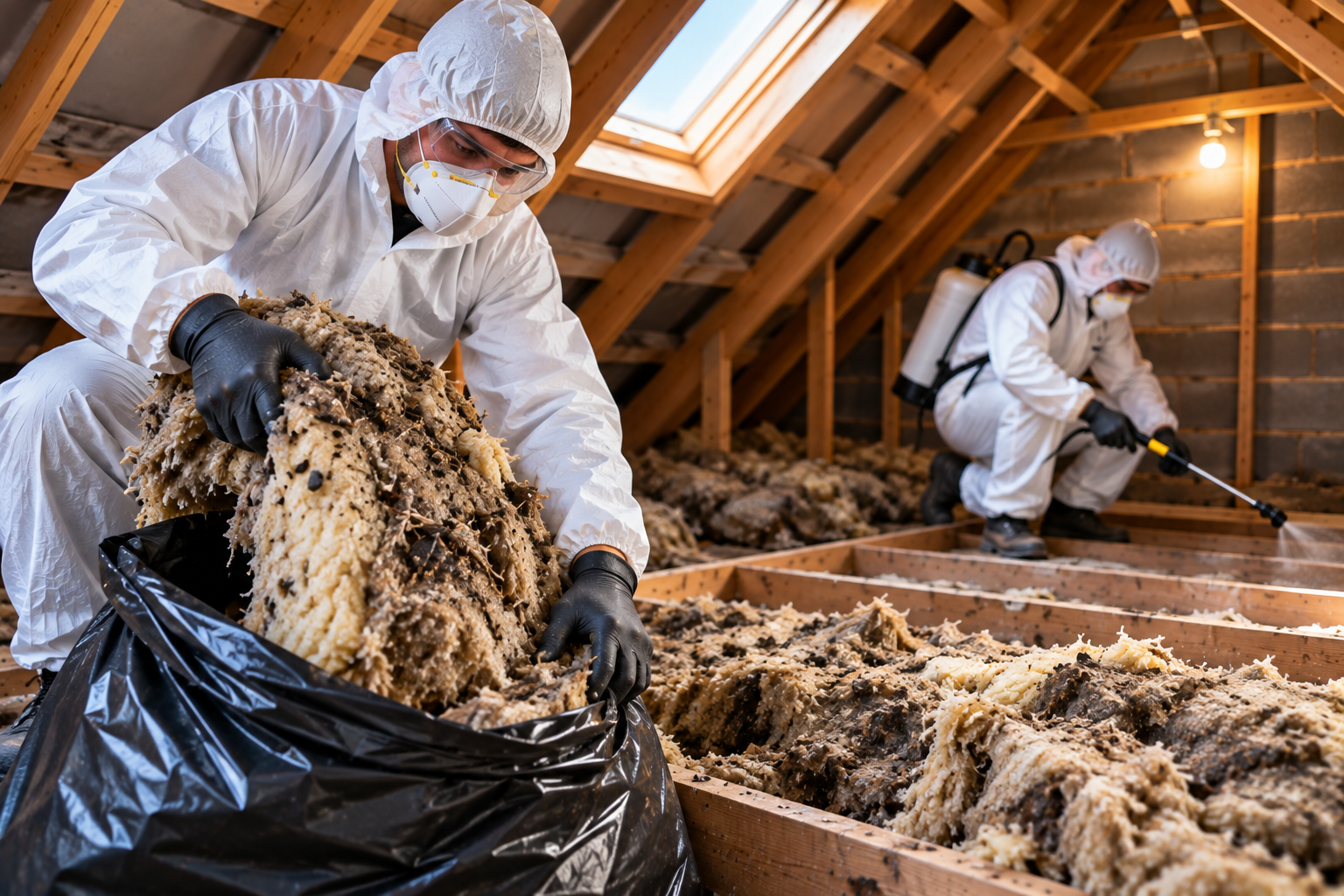
A carcass leaks into the insulation and timber underneath it, and there is usually a nest and plenty of droppings nearby. That patch has to come out and the joists be disinfected, or the smell can linger after the body has gone. Where several rats have died in a loft, the whole loft is usually soiled.
On a job in Oldham we removed five dead rats along with all of the old insulation, decontaminated the whole loft and filled the two places they were getting in. See how a rodent-damaged loft insulation clean-up works.
Stopping It Happening Again
Ask your pest controller where the bait is going, and whether traps would suit the loft better than poison, so nothing is left to rot out of reach. Above all, find out how the rats are getting in. If they are coming up from the drains, our guide to rats in the walls explains how that route is found and closed.
More Rodent Guides
Everything else we have written about rats and mice in the loft, and the clean-up service itself.
Areas We Cover
Based in Cheshire and working across the UK, with most rodent jobs in Greater Manchester, Merseyside and Cheshire.
Dead Rat Smell FAQs
How long does a dead rat smell last?
It is usually at its worst for a week or two and lasts until the body dries out, which can take two weeks or longer. It lasts longer in cool, damp weather or with more than one rat. When it is in the loft, removing the carcass and the insulation under it is the quickest fix.
Is the smell of a dead rat harmful?
The smell is unpleasant rather than dangerous for most people, but the carcass, its fluids and the flies it attracts carry bacteria. Don't handle it without gloves, and keep children and pets away.
Why are there flies in my house after rat poison?
Bluebottles lay their eggs on carcasses, so a burst of flies indoors a week or two after treatment usually means a dead rodent nearby. They stop once the carcass has been removed or has dried out.
Will the smell go away on its own?
Yes, eventually, once the carcass dries out. If it is in the loft, it is better removed along with the soaked insulation under it, which can keep smelling.
Do you remove dead rats from lofts?
Yes, as part of a clean-up: the carcasses come out with the soiled insulation, and the loft is disinfected and refilled. Send a couple of photos from the hatch and we will tell you whether it needs a spot clean or a full clear-out.