Short answer: Get a pest controller or your council to treat the rats first, leave the insulation alone and keep the hatch shut. Most rats reach a loft through a fault in the drains and up the cavity wall, so finding and closing that route is what stops them coming back. Once they have gone, the soiled insulation is stripped out damp, the loft is disinfected and it is refilled.
Signs of Rats in the Loft
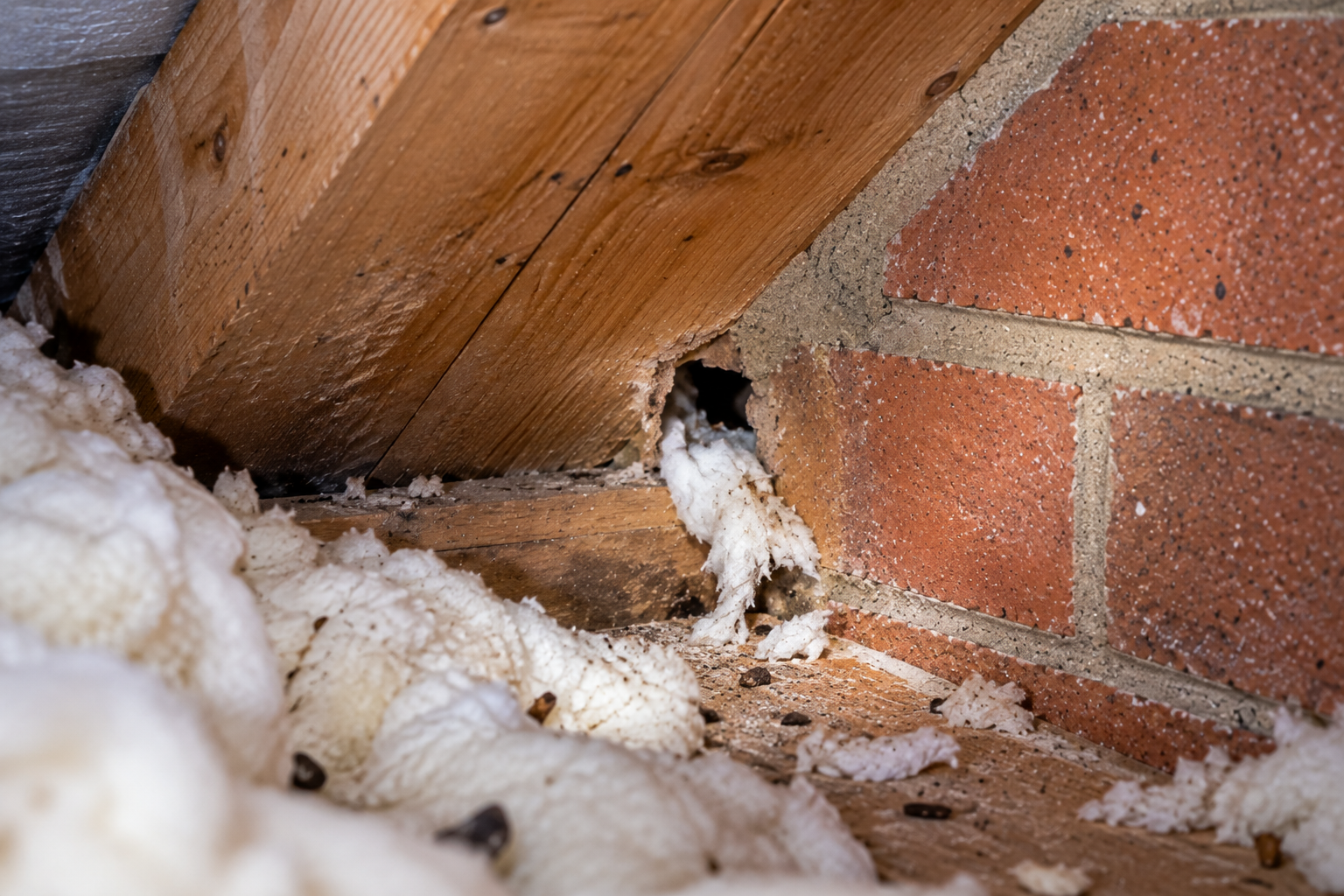
- Droppings: 12 to 20mm long, thick with blunt ends, in groups rather than scattered. Our guide to identifying droppings in the loft shows how they differ from mouse, squirrel and bat droppings.
- Noise at night: heavier running and thumping than mice make, and gnawing. Rats are mostly active after dark.
- A strong smell: a sharp, ammonia smell from urine. A sweet, rotten smell after poison has gone down usually means a dead rat; see dead rat smell in the loft.
- Runs and tunnels: trails pressed into the top of the insulation, tunnels through it, and flattened patches where they rest.
- Gnawing: on timber, pipes, cables, stored boxes and anything plastic.
- Grease marks: dark smears along joists and around holes they use every night.
- Nests: shredded insulation, paper or fabric pulled into a heap, often near the eaves or over a warm ceiling.
How Rats Get Into a Loft
Brown rats can climb, but most of the rats we find in lofts didn't come over the roof. They came up from below:
- Through the drains. A cracked pipe, a disused connection left open under the floor, or a damaged inspection chamber lets rats out of the sewer and under the house. Council pest control teams often point to a drain fault as the most common reason rats get inside homes.
- Up the cavity wall. Once they are under the house, the gap inside a cavity wall is a ready-made climbing route, and in many houses it is open at the top into the loft. Our guide to rats in the walls covers this in detail.
- Through gaps. A rat can squeeze through a gap about the width of your thumb: broken air bricks, gaps around pipes and cables, and rotten fascias and soffits.
- Along the row. In older terraces and semis, the party wall in the loft isn't always built tight to the roof, so rats in one roof space can reach the next.
What to Do First
- Get them treated. Call your council or a private pest controller, ideally a member of the BPCA or NPTA. Councils vary a lot: some treat rats in homes for free, some charge, and some no longer offer pest control at all. We don't do pest control ourselves.
- Leave the insulation alone. Don't sweep, vacuum or pull it out. Dried droppings and urine turn to dust when disturbed; see are rat droppings dangerous?
- Keep the hatch shut and keep children and pets out of the loft. Don't keep food, bird seed or pet food up there.
- Ask about the way in. A good pest controller looks for how they are getting in. If rats keep coming back, a CCTV drain survey will show whether the drains are the route.
- Check the cables. If you can see chewed or bare wires, get an electrician to test the circuits. They can usually test the wiring without lifting every loft board.
- Send us photos. Once treatment has started, send a couple of photos from the hatch so the clean-up can be priced and booked for when the rats have gone.
How Long Does It Take to Get Rid of Rats in the Loft?
A typical treatment is a short course of visits over two to four weeks: bait or traps go down, the pest controller comes back to check and top up, and on the last visit the bait is taken away. Most council services book a course of two or three visits. If the rats keep coming back after a full course, the way in hasn't been found yet, and that is usually the drains.
One thing to expect: rats that eat poison don't die straight away, and some die in the loft or inside the walls. If the house starts to smell a week or so after treatment, that is the likely cause.
Is It Safe to Live With Rats in the Loft?
For a short time, while they are being treated, yes, as long as the hatch stays shut and nobody disturbs the loft. The risks build the longer they stay: urine and droppings soak into the insulation, they gnaw cables, which is a fire risk, and they breed quickly, so a couple of rats can become a colony within months. Rats rarely leave a warm, dry loft on their own while they still have a way in.
It is a common problem. Direct Line's analysis of council figures found local authority pest teams were called out to more than 291,000 homes across the UK in 2024, about one visit every two minutes.
What Happens to the Loft Afterwards
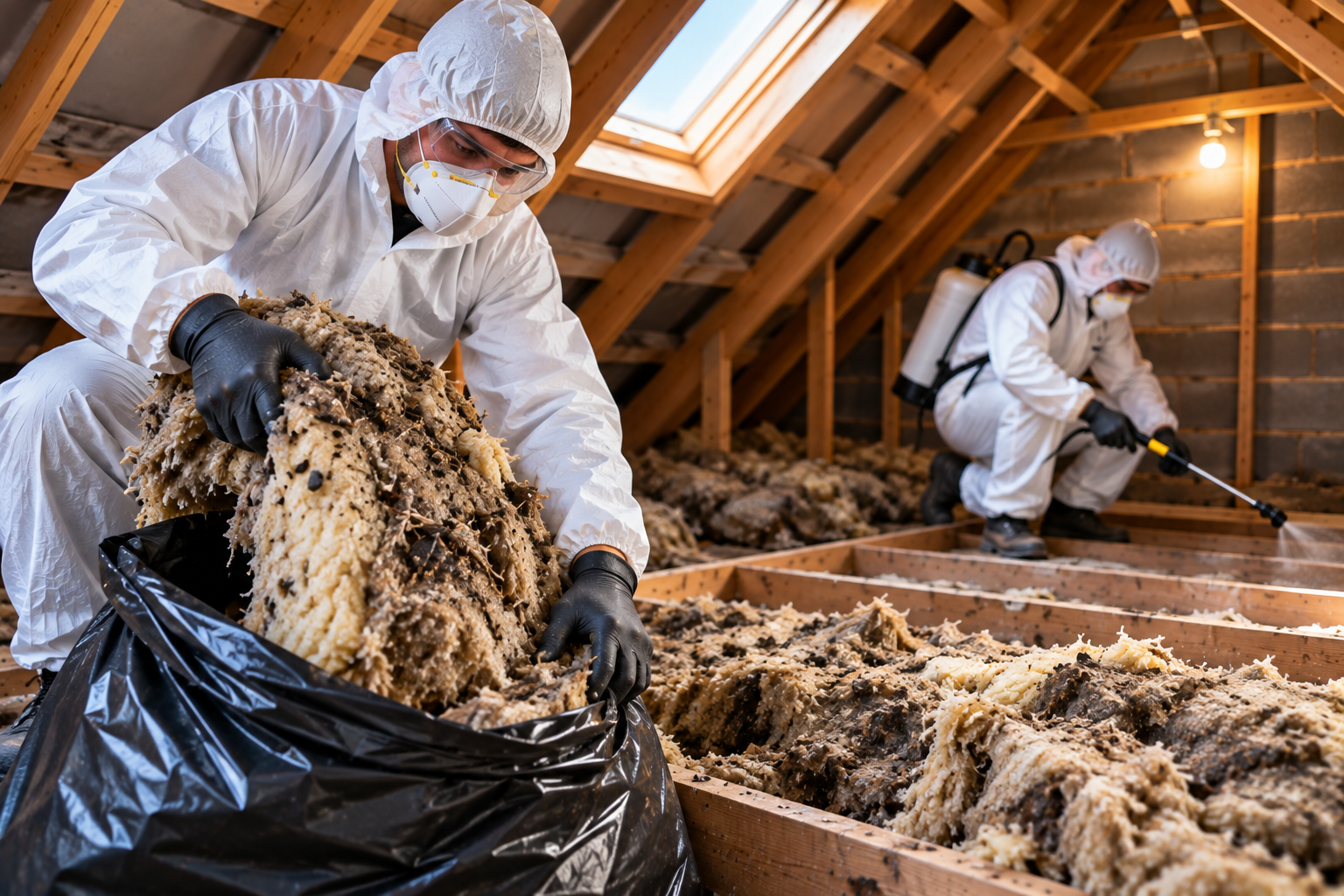
Once rats have lived in a loft, the insulation is usually full of droppings and urine, tunnelled through and nested in. It can't be cleaned where it lies, and new insulation laid on top just traps the problem and gives the next rats bedding. The loft needs a proper rat-damaged loft insulation clean-up: the soiled insulation stripped out damp and double-bagged, the loft vacuumed back to the joists with an industrial M-class or H-class extractor, disinfected with Virkon S, and refilled to 270mm or deeper once it is dry.
We seal the entry holes we find with mesh, and where the rats are coming up through the drains we can fit a one-way valve, as we did on these two jobs:
Rats in the Walls in Runcorn: Loft Cleared and Sealed
Rats climbing inside the walls: four entry holes outside and a route in through the drains. Loft cleared and decontaminated, holes meshed, one-way valve fitted.
Rat-Infested Loft in Oldham: Cleared and Decontaminated
Five dead rats in the loft, all the old insulation out, the whole loft decontaminated, and the two places they were getting in filled.
More Rodent Guides
Everything else we have written about rats and mice in the loft, and the clean-up service itself.
Areas We Cover
Based in Cheshire and working across the UK, with most rodent jobs in Greater Manchester, Merseyside and Cheshire.
Rats in the Loft FAQs
Can rats get into a loft from the roof?
They can climb rough brickwork, drainpipes, ivy and overhanging branches, so it does happen, but most rats in lofts have come up from below, through a drain fault and the cavity wall. Squirrels are the ones that usually come in over the roof.
Should I put rat poison in the loft myself?
It is better left to a pest controller. Poisoned rats can die in the loft or inside the walls and smell for weeks, and the strongest rodenticides are sold only to trained, certified users. A pest controller will also look for how the rats are getting in, which poison alone won't fix.
Will the council deal with rats in my loft?
Many councils will treat rats inside a home, some free and some for a charge, but services vary and some councils no longer offer pest control. Council pest control treats the rats; it doesn't strip or replace soiled insulation. Our areas page covers what the councils in Greater Manchester, Merseyside and Cheshire offer.
How do I know the rats have gone?
No new droppings, no fresh gnawing, no noise at night and bait that is no longer being taken, for a couple of weeks. Your pest controller will usually confirm it on the final visit. That is the point to book the clean-up.
Can I just put new insulation on top?
No. New insulation over droppings and urine traps the contamination and the smell, and gives the next rats somewhere warm to nest. The soiled insulation needs to come out and the loft disinfected first.