Short answer: Rats in the walls usually come from a defective drain: a cracked pipe, a disused connection left open or a damaged inspection chamber lets them out of the sewer, and they climb up inside the cavity wall to the loft. Treatment alone won't stop new ones arriving. A CCTV drain survey finds the fault, a drainage firm repairs it, and a one-way valve in the drain stops rats coming up the pipe.
Signs of Rats in the Walls
- Scratching, scrabbling or gnawing inside a wall, mostly at night.
- Noise that seems to move up and down the wall, often near the kitchen, the bathroom or a boxed-in soil pipe.
- A smell of urine near skirting boards or boxed-in pipework.
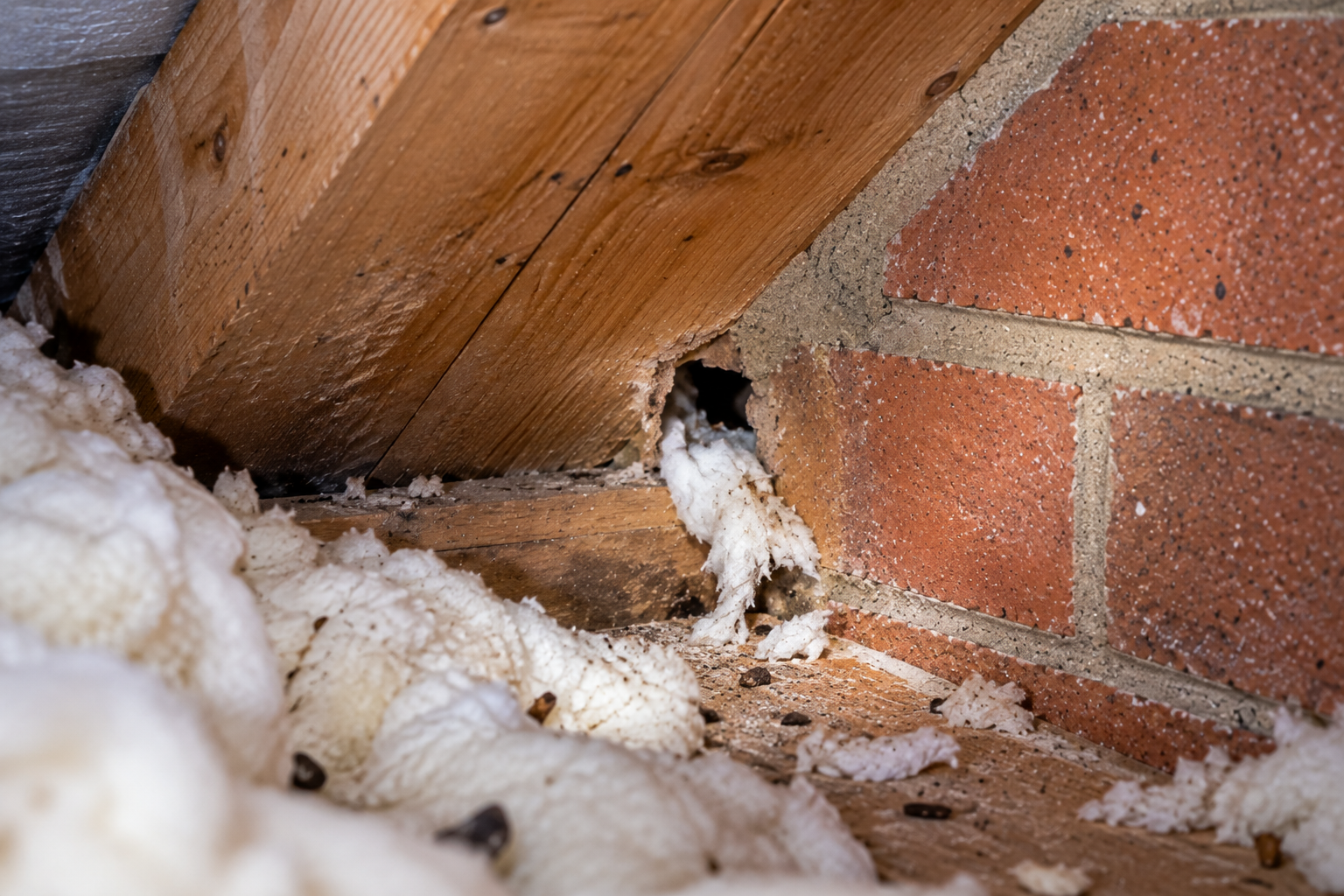
- Droppings in the loft along the tops of the outside walls, where the cavity meets the roof space.
- Rats in the loft that keep coming back after treatment.
How Rats Get From the Drains Into the Walls
Brown rats live in the sewers, and they are strong swimmers and good climbers. Where a drain is damaged, they can get out of it and under the house:
- Cracked or broken pipes, often old clay pipes with failed joints or tree-root damage.
- Disused connections: an old toilet, sink or gully removed during building work and the pipe left open under the floor or inside a wall.
- Damaged inspection chambers with broken channels or loose covers.
- Internal soil pipes and boxing with gaps where the pipes pass through floors and walls.
Once they are out of the pipe and under the house, a cavity wall is a ready-made climbing route. The rats go up inside the cavity, and in many houses it is open at the top into the loft, so they come out among the insulation. Council pest control teams often point to a drain fault as the most common reason rats get inside homes, which is why treatment on its own often doesn't last.
Who Is Responsible for the Drain?
In England and Wales, responsibility for drains changed on 1 October 2011, when private sewers and lateral drains were transferred to the water companies:
- A drain that serves only your home and sits inside your boundary is yours to maintain, or your landlord's.
- Shared sewers, and drains that run beyond your boundary, are the water company's responsibility. In the North West that is United Utilities.
If the fault turns out to be on the water company's side, report it to them. If it is in your own drain, the repair is yours to arrange. Some buildings insurance policies cover damage to underground pipes, so it is worth checking yours.
Finding the Fault: CCTV Drain Surveys
A drainage firm runs a camera through the drains from the inspection chamber and records the condition of the pipes, so you can see exactly where the break or open connection is. The survey also tells you what fixing it involves, from a patch repair or relining the pipe to digging it up. If rats keep coming back after a full course of treatment, this is usually the next step.
One-Way Valves
A one-way valve, sometimes called a rat blocker or rat flap, fits in the drain at the inspection chamber. Waste flows out through it as normal, but rats coming up from the sewer can't get past. It doesn't repair a broken pipe on the house side of the valve, and it won't stop rats that are already under the house, but it does stop new ones arriving from the sewer through that drain.
On a job in Runcorn, rats were climbing inside the walls and into the loft. There were four entry holes outside and a route in through the drains: we meshed the holes, fitted a one-way valve, and cleared and decontaminated the loft.
The Right Order: Rats, Drains, Then the Loft
- Treat the rats. A pest controller or your council deals with the rats that are already in. We don't do pest control ourselves.
- Find and fix the route. A CCTV drain survey finds the fault, and a drainage firm repairs it.
- Close it off. Entry holes are meshed, and a one-way valve is fitted where the drains are the route.
- Clear the loft. The soiled insulation is stripped out damp, the loft disinfected with Virkon S and refilled once it is dry. Here is how a full rodent-damaged loft insulation removal works.
The order matters. A loft refilled before the route is closed just gives the next rats fresh bedding.
Rats Under the Floor and in Internal Walls
Rats also travel under suspended timber floors and along boxed-in pipework between floors, and the drains usually explain those too. Scratching under the floor near a bathroom or kitchen, or behind the boxing around a soil pipe, points the same way. See rats in the loft for the signs and first steps, and dead rat smell in the loft if a rat has died inside a wall after treatment.
More Rodent Guides
Everything else we have written about rats and mice in the loft, and the clean-up service itself.
Areas We Cover
Based in Cheshire and working across the UK, with most rodent jobs in Greater Manchester, Merseyside and Cheshire.
Rats in the Walls FAQs
Can rats climb up inside cavity walls?
Yes. The inside faces of a cavity are rough enough to climb, and in many houses the cavity is open at the top into the loft. Rats that get out of a broken drain under the house often use it to reach the roof space.
Will rats in the walls go away on their own?
Not while the route is open. Treatment deals with the rats already there, but if the drain is broken, new ones can keep arriving from the sewer.
Who pays to fix a broken drain?
If the drain serves only your home and is inside your boundary, it is yours to repair, and some buildings insurance policies cover underground pipes. Shared sewers and drains beyond your boundary are the water company's responsibility; in the North West that is United Utilities.
Does a one-way valve stop all rats?
It stops rats coming up from the sewer through that drain. It won't remove rats already under the house or in the walls, and it won't block other gaps, so the rats still need treating and the entry holes sealing.
How do I know if the rats are coming from the drains?
Rats that keep returning after a full course of treatment, scratching in the walls near the kitchen, bathroom or soil pipe, and droppings in the loft along the tops of the outside walls all point that way. A CCTV drain survey confirms it.